Your First Affiliate Campaign: A Practical Launch Plan
You have picked an affiliate program. You have a link. Now what?
This is where a lot of beginners get stuck. A link is easy to share. A useful reason for someone to click takes a little more work.
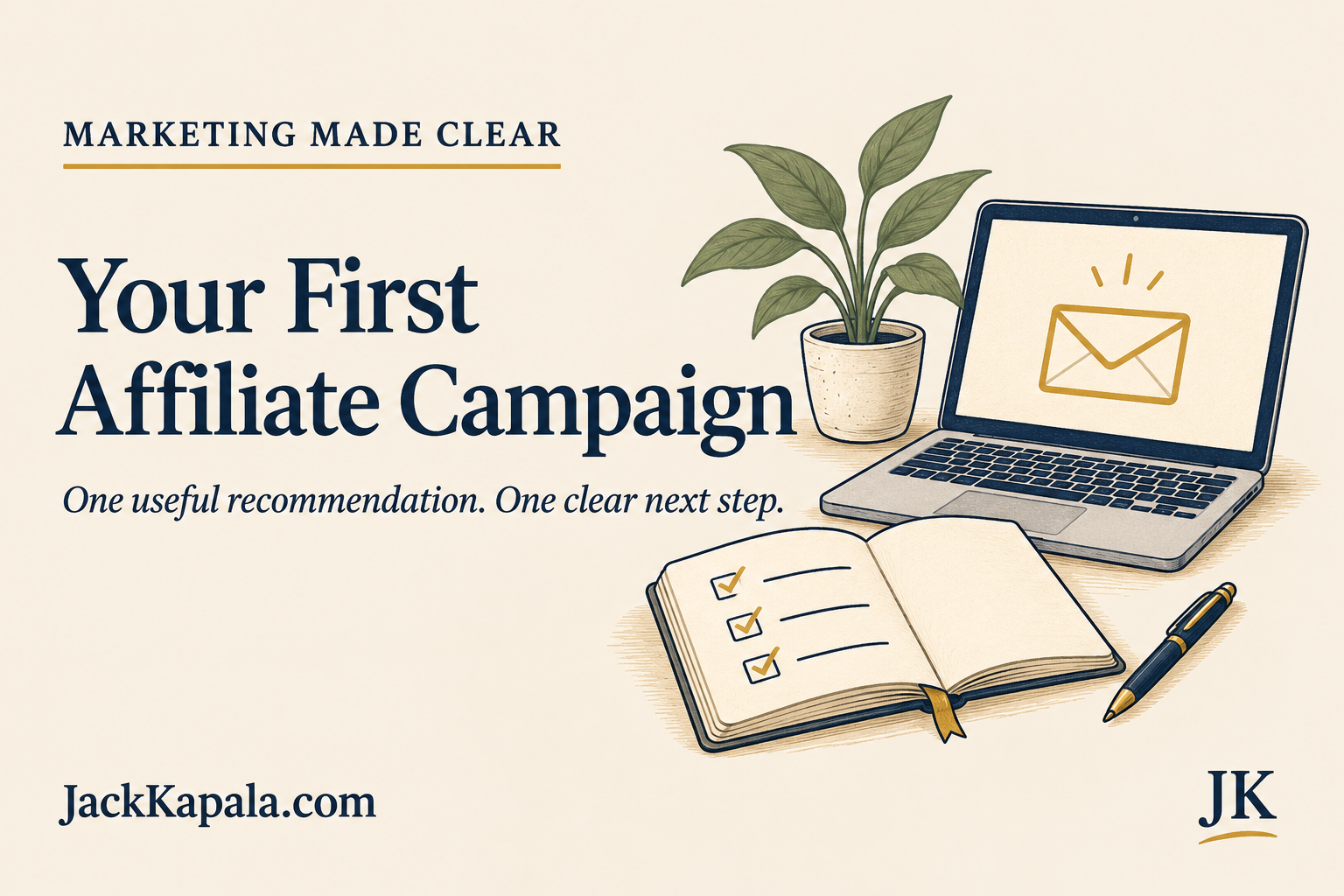
Your first affiliate campaign can be small: one audience, one problem, one useful recommendation, and one clear next step. The goal is to build something you can publish, check, and improve without starting over every week.
If you need the basics first, read How to Do Affiliate Marketing: A Practical Beginner’s Guide. This article takes the next step: putting a campaign together.
Start with a problem you can describe
“People who want to make money” is too broad to guide a recommendation. You need a person with a specific task or frustration.
For our example, imagine you help independent service business owners who send estimates but struggle to follow up. They do not need another complicated marketing system. They need a simple way to remember interested prospects and send useful follow-up messages.
That is a hypothetical example, not a report of results. We will use it to make the decisions easier to see.
Try this sentence for your own campaign:
I help [specific audience] with [specific problem], so they can [practical outcome].
Our version: “I help independent service business owners organize estimate follow-up, so interested prospects do not get forgotten.”
Notice that we have not picked software yet. First we need to understand the job it must do.
Choose an offer that fits the job
A generous commission does not make a product useful. Before recommending an email tool in this example, check whether it actually supports the workflow your reader needs.
- Can a beginner create a signup form and a basic follow-up sequence?
- What does the plan cost now, and what changes as the contact list grows?
- Are the needed features included in that plan?
- What support, tutorials, and cancellation options are available?
- What would make this tool a poor fit?
Check the current product documentation and pricing. If you have used the tool, describe what you did and what you found. If you have only researched it, say that. Do not turn a vendor’s claim into a personal success story.
You may find that the reader needs a better follow-up habit before buying any software. That is a useful conclusion, too.
For a broader evaluation checklist, see Before You Join, Ask Better Questions.
Read the affiliate terms before building around the link
Affiliate programs set their own rules. Your campaign should fit the program you joined.
Check where you may promote, whether email links are allowed, how tracking works, and whether redirects or branded short links are permitted. Also check payout requirements, refund handling, and any restrictions on brand names or advertising.
A tracked click is not a guaranteed commission. A purchase may be outside the attribution window, credited elsewhere, or later refunded. Keep pending and approved commissions separate when you review results.
Save the program’s terms and your notes somewhere you can find them. Recheck them when changing how you promote.
Build one page that helps someone decide
Your first page does not need to cover every tool in the market. It needs to answer the questions a suitable reader would ask before taking the next step.
For our example, a useful title could be: How to Set Up a Simple Follow-Up Routine After Sending an Estimate.
The page would explain the routine first: record the estimate, choose a reasonable follow-up time, and write a helpful message that invites a response. Then it could explain where an email tool helps and where personal follow-up still matters.
Use this outline:
- The problem: Who is this for, and what keeps getting missed?
- The process: What can the reader do before buying anything?
- The recommendation: Which product supports that process, and why?
- The limitations: Who should skip it, and what will it not do?
- The next step: What exactly should the reader check or try?
Specific details make the recommendation useful. “Easy to use” is vague. Explaining how a form connects to a short welcome sequence gives the reader something to evaluate.
Avoid filling the page with competing buttons. Give readers a clear next step that matches the page’s purpose, such as checking the current plan details or following a setup tutorial.
Make the commercial relationship clear
If a recommendation includes an affiliate link, tell readers plainly that you may earn a commission. Put that explanation where they will see it with the recommendation.
A straightforward example is: “I may earn a commission if you buy through this link.” Only add “at no extra cost to you” when that is accurate for the offer.
A disclosure does not make an unsupported claim acceptable. Keep descriptions of features, experience, and results accurate as well. For more detail, see the FTC’s guidance on endorsements and affiliate disclosures.
Choose one way to bring readers to the page
Do not make your first campaign depend on mastering a blog, five social platforms, paid ads, and video at the same time.
Pick a channel where you can reach the intended audience and explain the problem clearly. That could be an existing email list, a useful search-focused article, a short demonstration video, or a relevant social post where promotion is allowed.
For our example, a short post could explain one common estimate follow-up mistake and point to the full routine. The page then provides the detail. The affiliate link has a job inside that explanation.
Do not drop a promotional link into every conversation. Answer the question first, respect the community’s rules, and share the page when it adds something useful.
That distinction is the point of Are You Marketing or Just Posting Links?.
Plan a useful follow-up
Some readers will need more information before making a decision. If you offer email updates, explain what people are signing up for and send messages only to people who have agreed to receive them.
A simple sequence for the example might cover three things:
- First message: Deliver the promised checklist and explain how to use it.
- Second message: Show a sample follow-up routine and answer a common question.
- Third message: Explain when software becomes useful, including its costs and limitations.
Each message should help on its own. Repeating “buy now” three times does not become a follow-up strategy.
Keep the sequence realistic. A tool cannot write a thoughtful response to every prospect for you, and automation does not replace checking whether the message fits the situation.
Test the whole path before sharing it
Open the page as a visitor. Read it on your phone. Follow each link and check that it reaches the intended destination.
If you have an email signup, test it with your own address. Confirm that the promised item arrives and that the unsubscribe option works. Do not assume the connection is working because the form looks right.
Check that your affiliate link is the one supplied by the program and that any tracking labels follow its rules. Avoid making a test purchase unless the program explicitly permits it.
A link manager such as Pretty Links can help organize approved branded links. Use it only where the affiliate program allows redirects. Keep a record of the original destination so you can maintain it later.
Measure the next decision, not just the click count
For a small first campaign, keep a simple record of the page, traffic source, launch date, clicks, approved conversions, and direct expenses. Record the reporting period so you can compare like with like.
The numbers help locate questions:
- Few visits: Is the topic reaching the right people?
- Visits but few clicks: Does the page explain the fit and the next step clearly?
- Clicks but no approved conversions: Check the destination, audience fit, terms, and reporting delay before drawing conclusions.
- Sales but high refunds: Revisit the expectations your recommendation creates.
A handful of visits is not enough to prove that a campaign works or fails. Look for patterns, read the questions people ask, and change one meaningful thing at a time.
Do not treat gross commissions as profit. Expenses matter, and the time you spend is worth recording even if it does not appear on an invoice.
Your first campaign plan
Before adding another offer, write down these answers:
- Audience: Who is this for?
- Problem: What specific task or frustration will the page address?
- Offer: Why does this product fit, and who should skip it?
- Helpful content: What will the reader learn even without buying?
- Next step: What should a suitable reader do after reading?
- Traffic source: Where will the first relevant readers come from?
- Follow-up: What useful information can you provide with permission?
- Review: What will you check after launch, and when?
Then publish the smallest complete version you can stand behind. Keep your notes, answer real questions, and improve what is already there before adding more moving parts.
One clear recommendation, explained well and maintained over time, gives you something to build on.
For more practical marketing ideas, join my email updates. You can also browse the Resources page as you decide what belongs in your own setup.
This article was created with AI assistance and edited for publication. The example is illustrative; it does not describe a personal test or promise earnings.